Why Kenyans Still Dispute Land Even After Title Deed Issuance in 2026
Why do land disputes continue after title deed issuance in Kenya? Explore inheritance claims, fraud, double allocation and land verification.
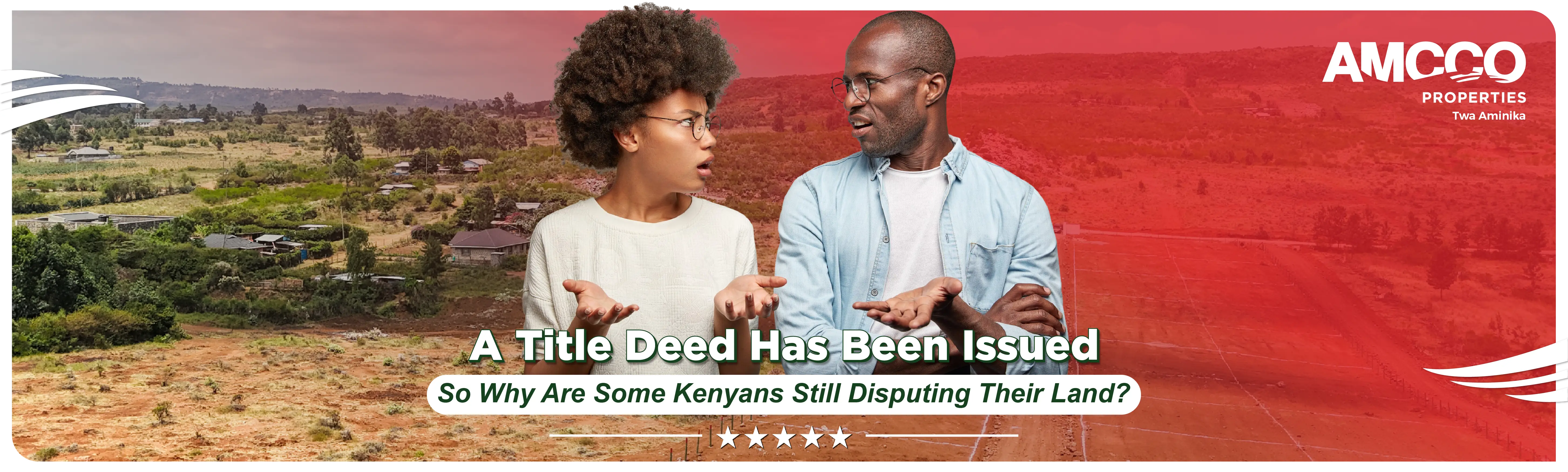
A Title Deed Has Been Issued. So Why Are Some Kenyans Still Disputing Their Land?
For many Kenyans, obtaining a title deed represents the ultimate assurance of land ownership. It is the document people work towards after years of saving, planning and making financial sacrifices to secure a piece of property.
But what happens when someone presents a title deed, only for another person to emerge and claim ownership of the same land?
It is a situation that raises difficult questions about land ownership in Kenya. How can disputes continue when a title deed has already been issued? Can a registered owner lose their property? And does having a title deed automatically mean that the ownership process was legally sound?
The answers lie in understanding Kenya's land registration system, the history of particular properties and the legal procedures governing land transactions.
While a title deed remains a fundamental document in establishing ownership, its existence does not necessarily bring every possible ownership dispute to an end.
1. A Title Deed Is Important, but Its Legal Validity Matters
A title deed provides evidence of registered ownership. Under Kenya's Land Registration Act, 2012, registration establishes significant legal rights and protections for the person listed as the proprietor.
Section 26 of the Act provides that a certificate of title is to be taken as prima facie evidence that the named proprietor is the absolute and indefeasible owner, subject to the exceptions provided by law.
However, the law also recognises circumstances in which a title can be challenged.
These include cases where a title was obtained through fraud or misrepresentation involving the registered proprietor, or where the property was acquired illegally, unprocedurally or through a corrupt scheme.
This distinction is important because land ownership is not determined by the physical document alone. The circumstances surrounding its issuance and the legality of the underlying transaction may also become relevant.
For prospective buyers, this means that verifying a title deed should go beyond checking the name printed on it. It requires establishing whether the ownership records are genuine and whether the person selling the property has the legal authority to do so.
2. Inheritance Disputes: When Family Land Becomes a Legal Battle
Family inheritance is another area where land ownership disputes can arise.
Consider a situation where a parent dies, leaving behind several acres of land. Before the family completes the succession process, one of the children decides to sell a portion of the property.
The individual may argue that they are entitled to the land because they are a child of the deceased or because they possess the original title deed.
However, being a family member does not automatically give someone the legal authority to dispose of property belonging to a deceased person's estate.
Under Kenya's Law of Succession Act, the administration and distribution of a deceased person's estate must follow the applicable succession procedures.
A personal representative appointed through the succession process has specific legal responsibilities. Where a grant is required to be confirmed before distribution, the property must be dealt with in accordance with the law and the relevant court orders.
This is why buyers interested in inherited property should establish whether the seller has the necessary legal authority, whether the succession process has been properly completed and whether the proposed transaction is consistent with the court-approved distribution of the estate.
A transaction that appears straightforward can become complicated when the interests of beneficiaries have not been properly addressed.
3. Double Allocation: How Can Two People Claim the Same Land?
Double allocation is another issue that has contributed to land ownership disputes in Kenya.
It generally refers to situations where the same parcel of land, or overlapping portions of it, are allocated or registered in favour of different parties.
Imagine purchasing land, completing the necessary payments and receiving a title deed. Several years later, another individual appears with documentation claiming ownership of the same parcel.
Such disputes may arise from historical land administration irregularities, conflicting allocation records, fraudulent dealings or errors in the registration process.
Some disputes also involve public land that may have been improperly allocated to private individuals.
The difficulty is that two parties may each present documents they believe support their claims. Resolving the matter may require examining the property's ownership history, allocation records, survey information and the legality of the respective transactions.
This is why an official land search is an essential starting point when purchasing property. Where concerns arise, further investigations into historical records may be necessary.
4. Boundary Disputes: When the Disagreement Is About the Land Itself
Not every land dispute concerns the identity of the rightful owner. In some cases, the disagreement is about the exact location, size or boundaries of a parcel.
For example, someone may purchase a 50 by 100 plot, receive a title deed and later discover that a neighbouring landowner disputes the boundary.
These disagreements can arise from misplaced or interfered-with survey beacons, overlapping parcels, discrepancies in survey records or differences between the registered measurements and the land occupied on the ground.
In such situations, the existence of a title deed does not necessarily resolve the physical boundary question.
Kenya's land registration and survey framework provides procedures for addressing boundary disputes. Depending on the circumstances, the relevant Land Registrar and survey authorities may be involved.
For buyers, confirming the property's physical boundaries is just as important as examining its ownership documents.
A site visit should therefore involve more than viewing the available space. Buyers should establish that the land being presented corresponds with the official survey records.
5. Fraudulent Transactions: When Genuine Documents Are Used in Unlawful Deals
Fraud remains a significant concern in property transactions.
Some individuals may forge title deeds, impersonate registered proprietors, manipulate ownership records or attempt to sell property without the knowledge of the lawful owner.
In other situations, a person may possess genuine ownership documents but lack the legal authority to undertake a particular transaction.
This creates an important distinction: the authenticity of a document and the legal authority of the person presenting it are two separate issues.
A prospective buyer should independently verify the property's registration details and establish the identity and authority of the seller.
Where necessary, an independent advocate can examine the supporting documents, investigate the ownership history and advise on any legal risks.
Relying exclusively on documents supplied by a seller without independent verification can expose a buyer to significant financial and legal complications.
6. The Importance of Understanding a Property's Ownership History
One of the common mistakes in land transactions is concentrating entirely on the property's location, price, accessibility and potential appreciation.
Although these factors matter, they do not establish whether the seller has a valid and transferable interest in the property.
A parcel may have attractive development potential and an existing title deed, yet still have unresolved legal or administrative issues.
Before purchasing, buyers should seek answers to several important questions:
Who is the registered proprietor?
How did the current owner acquire the property?
Are there registered cautions, restrictions, charges or other encumbrances?
Is the property subject to an ongoing court case or ownership claim?
Does the seller have the legal capacity to transfer the land?
Do the physical boundaries correspond with the official survey records?
An official search provides important information about the current registration position. However, it may not reveal every historical irregularity or unresolved claim.
Depending on the nature of the transaction, examining previous transfers, allocation documents, court records and survey information may also be necessary.
The objective is to understand not only who owns the land today, but also whether the ownership can withstand proper legal scrutiny.
7. What Should Buyers Do Before Purchasing Land in Kenya?
Avoiding land disputes begins with proper due diligence before money changes hands.
Although no single verification step can eliminate every possible risk, a thorough process can significantly reduce exposure to fraudulent or improperly documented transactions.
Conduct an official land search
Use the relevant Land Registry or official government land services to establish the registered proprietor, parcel details and registered interests.
Engage an independent conveyancing advocate
A qualified advocate can review the transaction, examine ownership documents, verify the seller's legal capacity and advise on potential risks.
Confirm the property's boundaries
Where necessary, engage a licensed surveyor to identify the parcel, establish its measurements and verify its beacons against the relevant survey records.
Visit the actual property
A physical inspection can help establish whether the land is occupied, cultivated or subject to competing claims. Where appropriate, seek additional information about the property's immediate surroundings.
Investigate the ownership history
For properties with complicated ownership backgrounds, further examination of previous transfers, allocation records and supporting documents may be necessary.
Use a properly documented sale agreement
Ensure that the transaction is supported by a professionally prepared agreement outlining the parties' obligations, payment terms, completion conditions and transfer procedures.
These measures help buyers make decisions based on verified information rather than verbal assurances or the appearance of ownership documents.
8. What Does Kenyan Law Say About Land Ownership Disputes?
Kenya has several legal frameworks governing property rights, land registration and the transfer of ownership.
Article 40 of the Constitution of Kenya protects the right to acquire and own property, subject to the limitations provided by the Constitution.
The Land Registration Act, 2012, establishes the framework for registration of interests in land and provides for the protection of registered proprietors, including circumstances in which a title may be challenged.
The Land Act, 2012, provides for the administration and management of land.
The Law of Succession Act governs the administration and distribution of deceased persons' estates, including property forming part of those estates.
These laws work together to establish the rights and responsibilities of landowners, buyers, sellers and other parties with legally recognised interests in property.
Where ownership disputes arise, the appropriate resolution depends on the nature of the claim and the available evidence. Some matters may involve the Land Registrar, while others require determination by the Environment and Land Court or the relevant court with jurisdiction.
Importantly, the existence of a competing claim does not automatically invalidate a registered title. Each case must be assessed according to its facts, the evidence presented and the applicable law.
9. Why Proper Documentation Should Be a Priority for Every Land Buyer
Land is more than a financial asset for many Kenyan households. It represents security, family stability, future development and, in many cases, an investment intended to benefit future generations.
For this reason, the process of acquiring land deserves the same level of attention as the investment itself.
A buyer should not wait until a dispute emerges to begin asking questions about ownership, boundaries or legal documentation.
Verification should happen before the purchase agreement is completed and before substantial payments are made.
Property developers and land sellers also have an important responsibility to provide accurate project information and ensure that the documentation supporting their transactions is properly handled.
At AMCCO Properties Ltd, we recognise that confidence in land ownership begins with transparency, clear documentation and an informed buying process.
We encourage prospective buyers to understand the documentation associated with every project, ask questions and undertake appropriate independent due diligence before making an investment decision.
The objective should always be to make land ownership a well-informed process rather than a decision based solely on promises or attractive offers.
Conclusion: The Real Question Is Not Whether a Title Deed Exists
A title deed remains one of the most important documents in establishing land ownership in Kenya. However, continuing disputes demonstrate that the circumstances behind its issuance also matter.
Inheritance complications, double allocation, fraudulent transactions, boundary disagreements and irregular acquisition can all create questions about ownership, even where title documents exist.
For prospective buyers, the lesson is clear: do not stop at seeing a title deed. Establish whether the ownership is genuine, whether the seller has the legal authority to transfer the property and whether the land can be properly identified and verified.
Because secure land ownership is not just about receiving a title deed. It is about understanding and protecting the legal rights that come with it.
At AMCCO Properties, we believe that informed decisions, proper documentation and transparency are essential foundations of responsible land investment.
Before investing in land, make informed decisions. Verify ownership, understand the documentation and seek professional legal advice before committing your money.
At AMCCO Properties Ltd, we believe every Kenyan deserves to understand the land ownership process.
Have questions about land ownership, title deed verification or buying property in Kenya? Get in touch with AMCCO Properties today.
Ready to start your land ownership journey?
📲 WhatsApp: AMCCO Properties
📞 Kikuyu Office: +254 701 293 199
📞 Ngong Office: +254 722 993 030
📞 Thika Rd Office: 0720001003
📞 Diaspora: +254720 009 005
📧 Email: diaspora@amcco.co.ke
Your future begins with one smart decision you make now