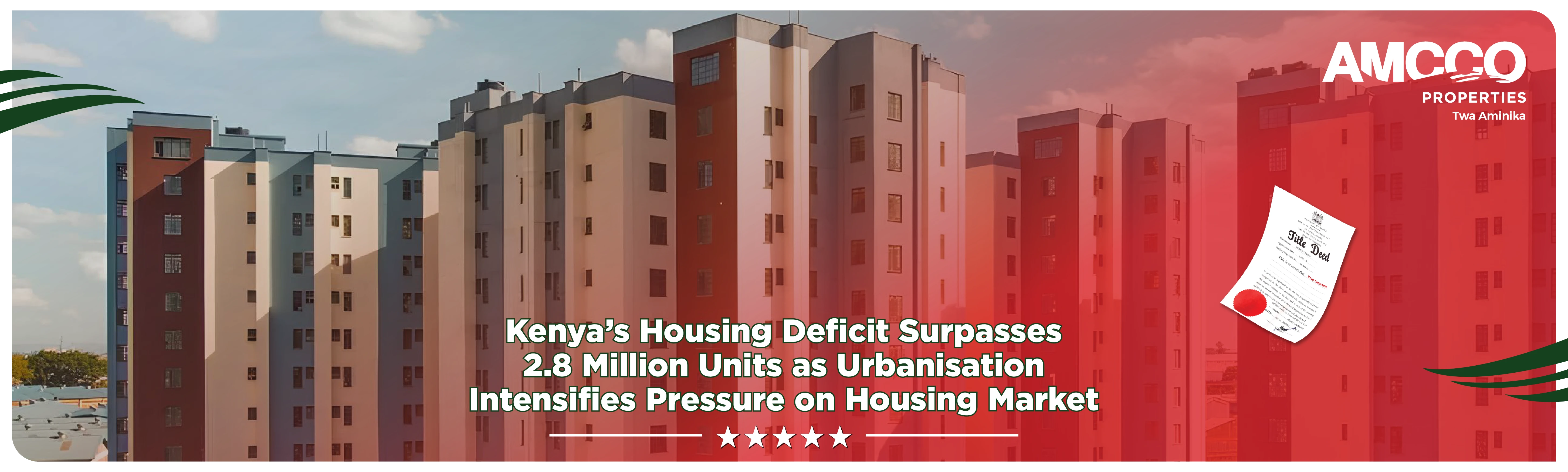
Kenya’s Housing Deficit Surpasses 2.8 Million Units in 2026.
Kenya's housing deficit exceeds 2.8 million units in 2026 amid rapid urbanisation, rising housing costs and growing demand for affordable homes.
Kenya’s Housing Deficit Surpasses 2.8 Million Units as Urbanisation Intensifies Pressure on Housing Market
Kenya’s housing shortage continues to grow, with the country facing a deficit of more than 2.8 million housing units amid rapid urbanisation, population growth and rising demand for affordable homes.
Kenya’s housing deficit has surpassed 2.8 million units, highlighting the growing challenge of providing adequate and affordable accommodation for millions of households across the country.
According to figures reported from the 2026 UN-Habitat report, Kenya’s housing deficit increased by approximately 300,000 units between 2020 and 2023, despite ongoing government efforts to expand housing supply through the Affordable Housing Programme.
The growing shortage reflects the pressure placed on the housing market by population growth, migration into urban areas and the rising cost of housing development. As towns and cities continue expanding, demand for housing, infrastructure and essential services is increasing faster than the supply of available homes.
Urbanisation continues to drive housing demand
Kenya is experiencing rapid urban growth, with cities and towns attracting people seeking employment, education, business opportunities and improved access to services.
This population movement is increasing demand for residential properties, particularly in Nairobi and its surrounding satellite towns. Areas experiencing improved road connectivity, commercial growth and expanding infrastructure are increasingly becoming destinations for residential development.
However, the pace of urban expansion is creating significant challenges for housing delivery. Millions of Kenyans continue to live in informal settlements, while many households struggle to secure decent accommodation within their financial means.
The growing housing deficit also places pressure on rental markets, land prices, developers and government infrastructure planning.
Affordability remains one of the biggest challenges
While the demand for housing continues to rise, affordability remains a major obstacle for many Kenyan households.
The cost of land, construction materials, financing and labour has made homeownership increasingly difficult, particularly for low- and middle-income earners.
A housing survey released by Habitat for Humanity in 2026 found that nearly nine out of ten Kenyan respondents were cutting back on essential spending to meet housing costs. The findings underline the financial pressure faced by households trying to maintain access to accommodation.
For many families, the challenge is not simply finding a house, but finding one that is safe, decent and affordable without compromising other essential needs.
Government initiatives seek to bridge the gap
The government continues to pursue the Affordable Housing Programme as part of efforts to increase housing supply and improve access to homeownership.
The programme aims to deliver affordable housing units to low- and middle-income households while supporting employment, construction activity and economic development.
However, the scale of the housing deficit means that government initiatives alone may not be sufficient to meet the country's growing demand. Greater participation from private developers, investors, financial institutions and other stakeholders will remain essential in expanding housing supply.
Innovative financing models, partnerships and developments targeting different income groups could play a significant role in addressing the shortage.
What the housing deficit means for the real estate sector
The growing housing deficit presents both a challenge and an opportunity for Kenya's real estate industry.
Increasing demand for housing is expected to continue supporting residential development, land investment, rental housing and infrastructure expansion in emerging urban centres.
Satellite towns surrounding Nairobi are attracting attention as developers and homebuyers look beyond established neighbourhoods in search of more affordable land and housing options.
The long-term opportunity, however, will depend on the ability of developers to deliver properties that meet the needs and financial realities of the market. Location, accessibility, infrastructure, affordability and proper land documentation remain critical considerations for buyers and investors.
As Nairobi continues to expand, its outskirts are increasingly becoming attractive destinations for residential development and property investment.
Areas such as Kikuyu, Ngong and Kamakis present opportunities for those looking to own land beyond the city centre.
Growing infrastructure, improved connectivity and expanding residential communities are making these locations worth exploring.
For prospective buyers, this presents an opportunity to secure land for future development, homeownership or long-term investment.
The road ahead
Kenya's housing deficit of more than 2.8 million units highlights the urgency of developing sustainable, affordable and accessible housing solutions.
As the population continues to grow and urban areas expand, the real estate sector will play an increasingly important role in shaping the country's future.
Addressing the housing shortage will require coordinated efforts from government, private developers, investors, financial institutions and communities to ensure that housing development keeps pace with demand.
The challenge is significant, but it also presents an opportunity to rethink how Kenya develops its cities, builds communities and delivers homes for future generations.
Opportunity beyond Nairobi CBD
The outskirts of Nairobi are increasingly attracting people looking for land to build homes, establish investments or secure property for the future.
Areas such as Kamakis, Ngong and Kikuyu offer buyers an opportunity to explore land ownership outside the city centre, with growing residential communities and expanding development in surrounding areas.
With the right location and investment plan, owning land outside Nairobi CBD can be a practical starting point for individuals looking to enter the property market.
Your opportunity to own land with AMCCO Properties
Through AMCCO Properties Ltd, buyers have an opportunity to explore land investment options in growing locations around Nairobi, including Kamakis, Ngong and Kikuyu.
Whether you are planning to build your future home, invest for the long term or secure land for your family, these locations offer opportunities worth exploring.
With flexible payment plans, free site visits and virtual site visits for clients who cannot physically visit the projects, AMCCO makes it easier for prospective buyers to explore available properties and make informed decisions.
For diaspora clients, the process also provides an opportunity to invest remotely, with title deed processing within 30 days as per applicable project terms.
The opportunity is closer than you think
You don't necessarily need to own property within Nairobi CBD to begin your property investment journey.
From Kamakis to Ngong and Kikuyu, opportunities to own land are available for those ready to take the next step.
Land ownership is becoming an achievable goal for buyers looking beyond the city centre.
With different locations and flexible payment options available, prospective buyers can explore opportunities that align with their budgets.
Whether you're planning to build, invest or secure land for your family, the opportunity to own property is within reach.
Through AMCCO Properties, you can explore land ownership opportunities in these growing locations and take a step towards securing your future.
Ready to start your land ownership journey?
📲 WhatsApp: AMCCO Properties
📞 Kikuyu Office: +254 701 293 199
📞 Ngong Office: +254 722 993 030
📞 Thika Rd Office: 0720001003
📞 Diaspora: +254720 009 005
📧 Email: diaspora@amcco.co.ke
Your future begins with one smart decision you make now